How does regenerative medicine fit into your treatment philosophy in a sports medicine setting?
My treatment philosophy is centered on the body’s innate design and capacity to heal itself, along with the principle of “first, do no harm.” In sports medicine, I want to understand why an injury occurred and address the underlying factors contributing to it rather than simply treating the symptoms.
Regenerative medicine gives us additional tools to support the body’s natural healing processes while keeping the focus on long-term function and outcomes. For me, it is not about finding one treatment that works for everyone. It is about understanding the patient, the injury, and where they are in their healing process, and then putting together the right combination of treatments to help them get better and stay better.

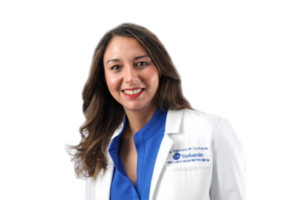
Danielle DeGiorgio DO, FAAPMR
Sports Medicine Specialist
Physical Medicine & Rehabilitation
Long Island, NY
What types of sports injuries or conditions do you find respond best to MLS® Laser Therapy?
We have successfully incorporated MLS® Laser Therapy into the treatment of a wide variety of acute, subacute, and chronic musculoskeletal conditions. In athletes, this includes injuries such as ankle sprains, achilles tendinitis, tennis elbow, rotator cuff and hamstring injuries. We also see significant value in our older and more active patients, particularly those with muscle injuries or osteoarthritis involving the knee, shoulder, hip, and hand.
One of the advantages I find particularly valuable is its versatility. It can be incorporated into treatment plans across a broad spectrum of musculoskeletal conditions and stages of injury, from helping manage pain during an acute injury to supporting patients as they progress through rehabilitation
In your experience, what are the benefits of combining MLS® Laser Therapy with regenerative treatments like PRP or stem cell therapy?
The data specifically evaluating the combination of MLS® Laser Therapy with Orthobiologic treatments such as PRP and bone marrow-derived therapies are still developing. However, our clinical experience has been very encouraging.
I commonly use laser therapy before and/or after an Orthobiologic procedure as part of a broader strategy to help manage pain and support the recovery process. Clinically, I have found that patients often seem to have less post-procedural discomfort and a smoother recovery when laser therapy is incorporated into their treatment plan.
I view MLS® Laser Therapy as a complementary treatment rather than a replacement for the Orthobiologic itself. The goal is to optimize the overall treatment environment and help patients move through their recovery more comfortably and efficiently.
Do you have a patient case or success story that illustrates the impact of MLS® Laser combined with regenerative medicine?
One patient who stands out was a 17-year-old competitive high school swimmer who had committed to compete at the Division I collegiate level. She sustained a multiligament ankle injury that threatened to interrupt both her senior season and her transition to college athletics.
We incorporated PRP into her treatment plan, with MLS® Laser Therapy used both before and after the PRP injection to help manage symptoms and support her recovery. She progressed through a structured rehabilitation program and was ultimately able to return to competitive swimming. Not only did she resume competing, but she went on to set a new personal record.
That outcome was particularly meaningful because the goal was not simply to reduce her pain or get her back to participation. It was to help her return to the level of performance she had achieved before the injury—and to continue excelling. Helping patients return to their previous level of activity and reach new goals is exactly why I am excited to go to work in the morning.
This experience reinforced my belief that recovery is often best approached comprehensively, combining appropriate biologic treatments, symptom management, MLS® Laser Therapy, and progressive rehabilitation.
How has offering MLS® Laser Therapy impacted your practice's workflow, patient retention, or revenue?
Setting appropriate expectations is extremely important. I explain to patients from the beginning that laser therapy is cumulative and that meaningful improvement will require a series of treatments rather than a single session. We see approximately 15–25 laser patients per day, and by the end of a treatment series, 9 out of 10 of our patients tell us they are grateful that laser therapy was incorporated into their treatment plan.
From a workflow standpoint, having patients return approximately twice a week creates additional opportunities for us to monitor their progress, reinforce their rehabilitation plan, and answer questions along the way. I actually think those additional touchpoints are valuable. Patients feel that we are actively involved in their recovery rather than simply seeing them for a procedure and sending them on their way.
There has also been a positive financial impact on the practice. The return on investment has been efficient, and laser therapy has become a valuable component of our overall treatment model. More importantly, I believe it has strengthened the patient experience by giving us another way to stay engaged with patients throughout their recovery.