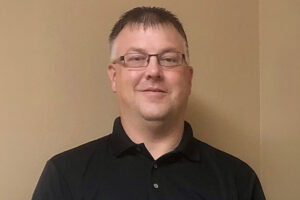
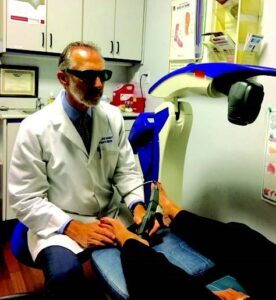
 For Dr. Josef J. Geldwert, medical director of The Center for Podiatric Care and Sports Medicine in New York, the goal is to get patients healed and back to life’s activities as quickly as possible. He knows that the technology offered to patients has to address the growing demand for non-surgical alternatives to common pains. As the Co-Medical Director for the NYC Triathlon, Dr. Geldwert knows the needs and concerns of runners, triathletes, and other athletes. Here he discusses the result of his years of experience.
What was a major driver to add advanced pain management technology to your practice?
Through extensive research, I opted to employ the use of powerful modalities to combat my patients’ pain. There were many options in the field, but at the forefront of pain management advances I found the broadest range of applications available from two technologies: Extracorporeal Pulse Activation Treatment (EPAT®) Technology and the Multiwave Locked System (MLS®) Therapy Laser.
EPAT is the application of vibrating pulses to tensed, shortened or overstretched muscles by means of physio-logical pulse frequencies and low vibration amplitudes. The applicator delivers pressure waves into the painful area to gradually regenerate the damaged tissue. Alternately, MLS Laser Therapy uses a patented synchronization of proven optimal laser wavelengths (808nm and 905nm) to favor and accelerate the body’s healing processes. When the laser beam is moved over the skin, the light energy (photons) penetrates the tissue, where it interacts with various molecules (chromophores) that cause photochemical, photothermal and photomechanical effects.
How do these tools align with your practice philosophy?
Both tools help achieve my practice goals by facilitating the healing of my patients’ pain. MLS Laser Therapy is a versatile tool that offers a non-invasive, painless approach to treating most acute conditions where there is obvious swelling or discoloration. MLS Laser Therapy also effectively treats chronic conditions such as degenerative joint disease and arthritis. EPAT is often utilized when the patient has a lower pain level at the outset of treatment. After EPAT, some patients may experience pain relief soon after the treatment, while others may take up to four weeks before feeling significant relief.
What chronic conditions respond well to treatment?
With the growing population of people over the age of 65 combating the pain and limitations of arthritis, I have seen an uptick in the number of arthritic patients receiving relief with MLS Laser Therapy, and seeing dramatic results in terms of treating the painful effects of arthritis.
We have had a 75-80% efficacy rate in successfully treating plantar fasciitis with both EPAT and MLS Laser Therapy over a 3-4 week time period; however, I prefer notto use EPAT on patients with a pain levelof 6 and above on the pain scale, becausethere is some discomfort associated with the treatment.
Which other conditions do you find particularly responsive to these therapies?
I utilize EPAT to treat muscle strains, calf strains and plantar fasciitis, when the patient’s pain level will allow it. When a patient has pain located in prominent bony areas or extensor tendons, EPAT, even at a low level, is painful. MLS Laser Therapy, however, can be used to treat extraordinarily painful conditions where EPAT cannot be used on a patient without causing discomfort. MLS Laser Therapy is also very effective in managing neuropathy and pain associated with nerve compressions like neuromas, due to its pain-free application. Postoperatively, I use MLS Laser Therapy to increase range of motion, reduce pain, inflammation and edema at the surgical site, and greatly reduce healing time.
What contraindications do you have to be aware of?
While EPAT is one choice for the reduction of pain, the use of anti-inflammatories or ice are contraindicated, as the therapy itself induces inflammation at the treatment site. MLS Laser Therapy has no such contraindications with supplemental therapies after a treatment. This is especially important to consider when the patient has a chronic ailment, like arthritis, when EPAT cannot be used.
When given a choice of modalities, which do patients typically choose?
Overall, more patients who visit my practice receive MLS Laser Therapy treatments; the painless application and short treatment times are major contributing factors for this, in addition to the vast number of ailments effectively treated, quickly, non-invasively and without side effects.