
SMALL ANIMAL
Improve Patient Outcomes and Client Satisfaction with Advanced Treatment Tools
Laser technologies are growing increasingly popular in veterinary medicine for their therapeutic and surgical applications.
Enhance Patient Care
Develop more effective treatment plans by expanding treatment capabilities.
Differentiate Your Practice
Leverage advanced treatment technologies to remain competitive in your field.
Expand Revenue Streams
Increase the value of your services with innovative procedures that elevate outcomes.
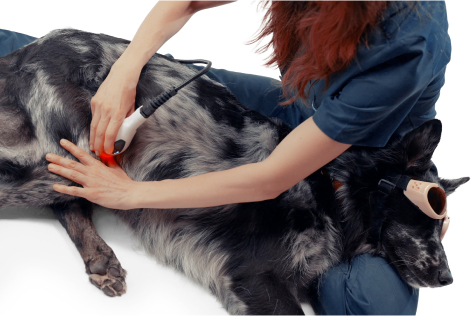
MLS® Laser Therapy
Light-Based Pain Management
The patented MLS system is a unique Class IV laser that synchronizes continuous and pulsed emission to provide unparalleled clinical results without generating heat.
With device configurations that offer stress-free, no-touch protocols, MLS Laser Therapy is quickly becoming the standard of care for pain management in the veterinary field.
- Musculoskeletal Disorders
- Degenerative Diseases
- Wound Healing & Post-Surgical Recovery
CO2 Laser Surgery
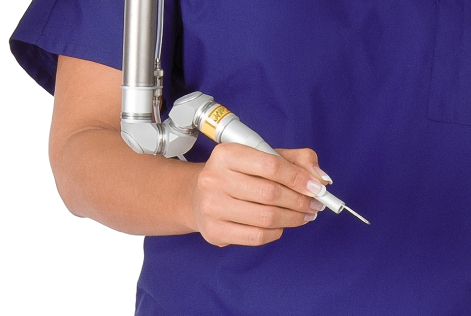
Elevate Your Surgical Suite
Compared to a traditional scalpel and ESUs, CO2 Surgical Lasers offer a more precise incision while sealing blood vessels and nerve endings as it incises, resulting in reduced bleeding, less pain, and a lower risk of infection.
- Soft-tissue Surgeries
- Dermatology
- Ophthalmology
Learn how Dr. Jan Bellows uses laser technologies to improve patient outcomes at his companion animal dentistry practice.

Knowledge center
Featured Posts
FAQs
MLS is the choice when the goal is managing pain or inflammation without cutting tissue, such as arthritis, wound healing, or post-op recovery support. CO2 is the choice when a surgical incision is required, such as soft-tissue, dermatologic, or ophthalmic procedures. Many small animal cases use both in sequence: CO2 for the procedure, MLS for recovery.
CO2 laser surgery seals blood vessels and nerve endings as it incises, which directly reduces intraoperative bleeding, post-operative pain, and infection risk compared to a scalpel or standard ESU. For small animal patients, where blood volume and physiological reserve are more limited than in larger species, that hemostasis advantage carries more clinical weight.
Yes. Documented cases include a cat with eosinophilic granuloma and Feline Atopic Skin Syndrome achieving a 90% reduction in lesions, and a cat with chronic, medication-resistant gingivostomatitis achieving rapid pain relief after one session with significant inflammation reduction within six treatments.
Musculoskeletal disorders, degenerative diseases like osteoarthritis, and post-surgical or wound recovery are the core indications. These are high-frequency presentations in general small animal practice, which is part of why MLS has become a standard pain management option rather than a niche add-on.