Nolaska Souliotis, DPM operates at the forefront of postoperative podiatric care, where personalized attention and compassionate care are guiding principles that inform every aspect of patient interaction at her practice. With a keen understanding of the challenges faced by patients post-surgery, Dr. Souliotis has dedicated herself to revolutionizing the recovery process. With a focus on custom treatment plans tailored to each patient’s unique needs, she ensures that no aspect of postoperative care is overlooked. This commitment to excellence extends beyond the operating room and into her community where she is known for her care, results, and for setting a new standard for recovery.
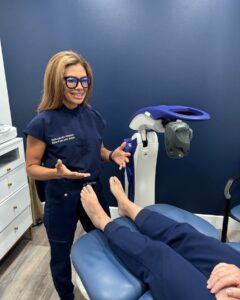
As part of her standard of care, Dr. Souliotis leverages adjunctive therapies to redefine the recovery process for patients. In her pursuit of optimizing postoperative outcomes, Dr. Souliotis recognized the potential of MLS Laser Therapy as a revolutionary tool in the recovery process. By utilizing a synchronized dual wavelength emission system, MLS Laser Therapy uses light energy to penetrate deep into tissue, naturally accelerating healing and reducing pain and inflammation. Its ability to precisely target specific tissue areas, coupled with quick treatment times and no side effects, makes it a groundbreaking option for addressing a wide range of podiatric conditions. By harnessing the power of this innovative technology, Dr. Souliotis aims to enhance outcomes for her patients. The integration of MLS Laser Therapy into her practice is not just a strategic move; it’s a reflection of her unwavering commitment to providing the best possible care.
Case #1
This case highlights the effectiveness of MLS Laser Therapy by comparing postoperative recovery with and without laser treatments on the same patient.
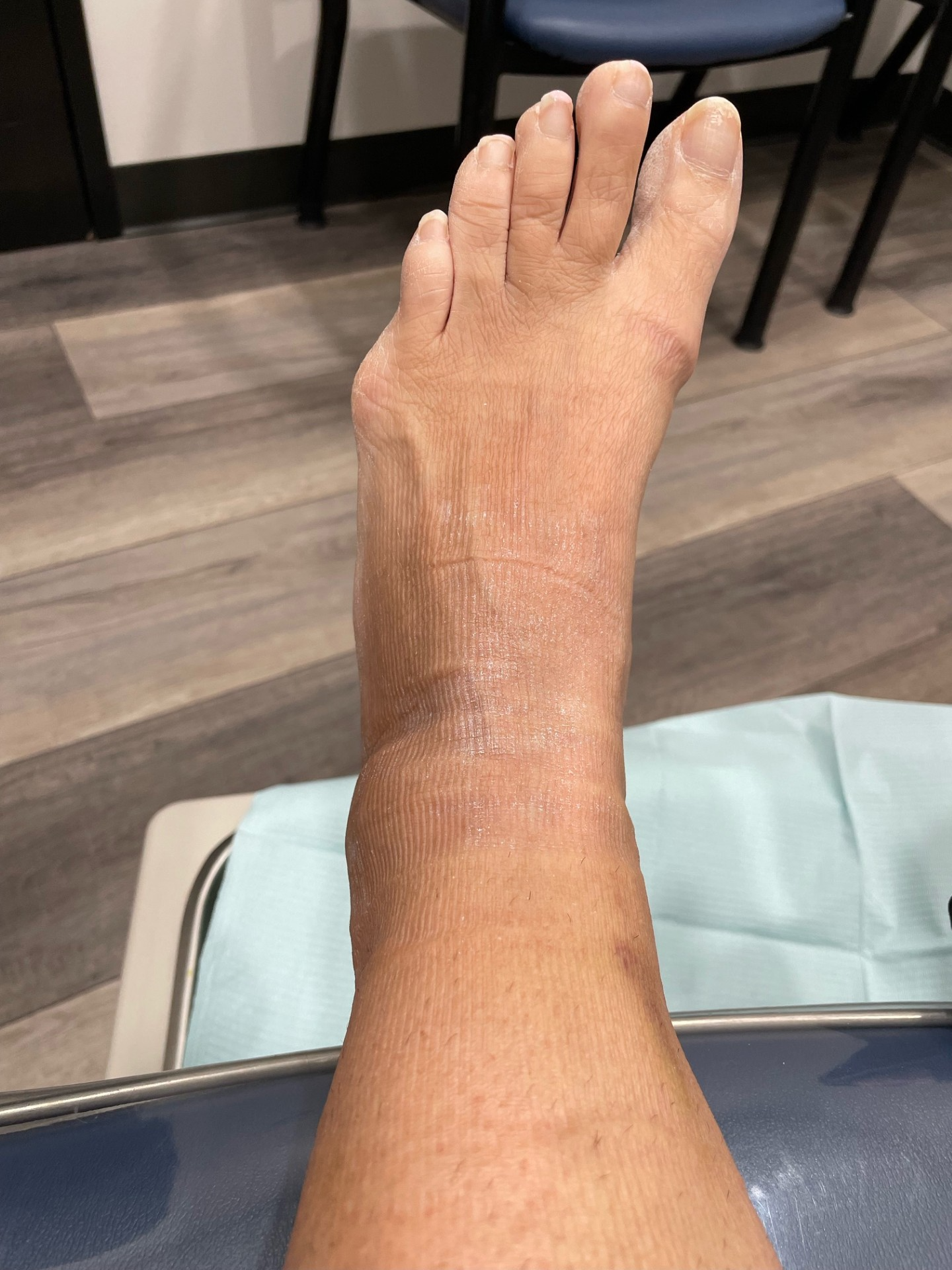
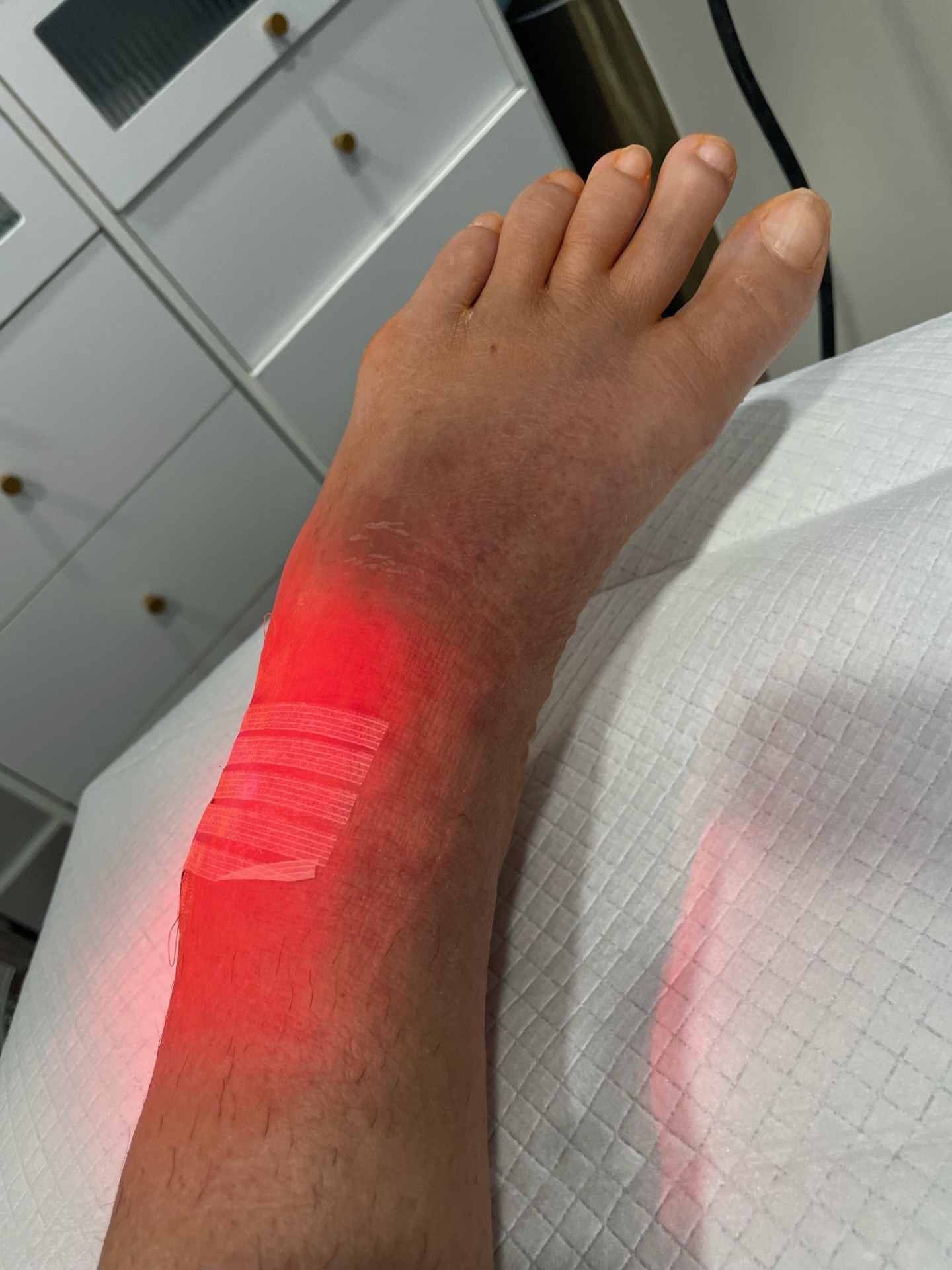
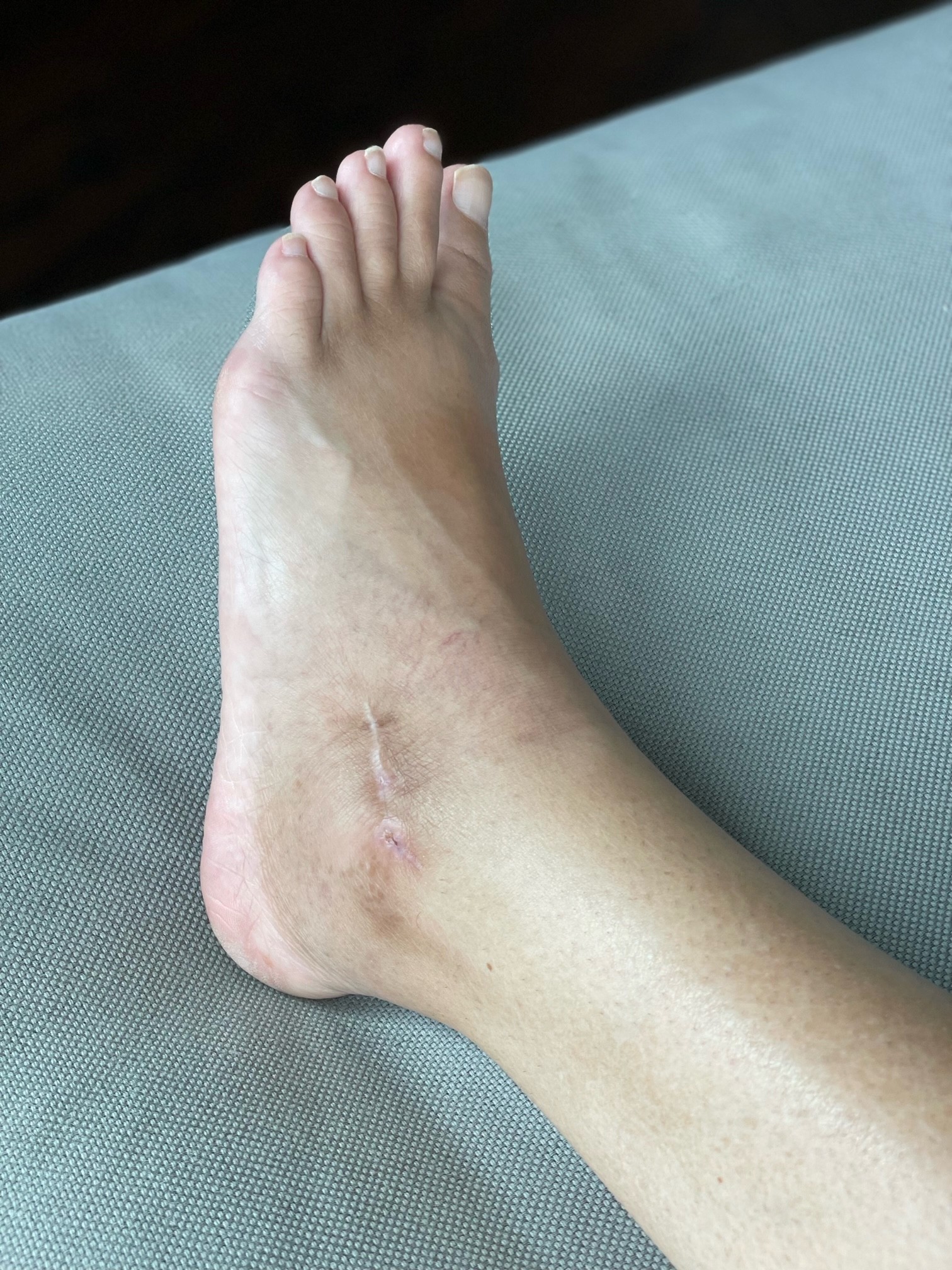
A 73-year-old female underwent a first metatarsal cuneiform arthrodesis for a right severe hallux abducto valgus deformity. The patient did not receive postoperative MLS Laser Therapy. The patient’s recovery was complicated due to significant edema at the surgical site. The patient had dehiscence due to swelling and developed infection. The patient was treated with oral antibiotics and compressive wraps. After this, the patient experienced complications at the fusion site which required revisional surgery. There was concern for bone infection due to cellulitis. Biopsy was obtained and was negative for osteomyelitis. The patient underwent revisional surgery for fusion of the first metatarsal cuneiform joint. She then received MLS Laser Therapy as a part of their surgical care plan. The patient received 1 session before surgery to prepare the tissue for operation, and 5 sessions post-operatively to assist in the recovery process. By adding MLS to the postoperative care plan, the patient’s recovery was significantly improved in comparison to her prior surgery. She had significantly less edema and the incision healed within two weeks. Her edema was minimal throughout the entire recovery. Patient was transitioned to a supportive shoe after eight weeks of immobilization. She was impressed with her postoperative MLS Laser Therapy course and results.
Case #2
A 44-year-old female underwent anterior talofibular repair with internal brace augmentation of her ankle. She agreed to MLS Laser Therapy including one session prior to her surgery. The patient’s recovery was smooth without complication. She had very minimal edema, and did not take any pain medications aside from ibuprofen. She was transitioned into a brace within four weeks of immobilization with a boot.